What Changes When You Talk to the Builder Instead of a Sales Rep
Quick answer: When you talk to the builder directly, the person answering your questions is the person who will run your job. They know the lot, can decide on the spot and are still there when the framing goes up. A sales rep may be helpful, but usually checks with someone else and often hands you off after signing.
Shopping for a custom home builder in Suwanee, you will meet two kinds of first contact: a salesperson or model-home agent, or, usually at smaller firms, the builder. Neither is automatically better, but the difference shows up at specific moments in a build, and it is worth knowing where before you choose.
What is the actual difference between a builder and a sales rep?
A builder plans and runs the construction; a sales rep sells it. At a large company those are different people in different departments. The rep's job is to explain the plans, options and pricing structure and get the contract signed. After that, a construction manager or superintendent you may never have met takes over the site. With a small custom builder, one or two people often cover both jobs, so the person who quotes the house is the same person who walks the footings.
The National Association of Home Builders notes that custom builders often build fewer than 10 homes a year. At that size, talking to the builder directly is less a sales feature than simply how the business works.
Builder vs. sales rep at a glance
| Question | Talking to the builder | Talking to a sales rep |
|---|---|---|
| Who answers your questions | The person who will build the house | A salesperson who relays technical questions |
| Who knows the site | Someone who has walked your lot or one like it | Often someone who knows the plans, not the land |
| Who makes decisions | The builder can say yes, no or "here is what it takes" | Usually needs approval from estimating or construction |
| Speed of an answer | Often in the same conversation | Often after a call back |
| Who you deal with after signing | The same person | A hand-off to a construction manager |
| Follow-through on promises | The person who promised is the person who delivers | Promises pass between departments |
| What it is best at | Custom work, odd lots, changes and judgment calls | Standard plans, set options and a polished showroom |
Who answers your questions?
With the builder, the answer comes from the source. Ask whether a walk-out basement works on your slope, whether a beam can come out to open the kitchen, or how a covered porch ties into the roofline, and the builder can usually tell you right there, along with what it would take.
A sales rep may know the standard plans well, but questions outside the price sheet typically go back to the office and the answer comes back secondhand. That is how large companies divide the work, but some detail can get lost on the way.
Who knows the site?
The builder does, because the builder has to build on it. In Suwanee and the rest of Gwinnett, lots vary a lot: older wooded parcels, slopes, stream buffers, utility easements and neighborhood covenants. Someone who has stood on the lot can tell you where the house sits best, how the driveway will run and what the grading will involve.
A sales rep in a model home is usually selling homes on lots the company already controls, so the land questions have been answered in advance. If you are building on your own lot, that is exactly the knowledge you need from the first conversation. Our guide to building on your own lot covers the questions to ask.
Who makes decisions?
A builder can make the call; a rep usually has to ask. On a custom home, decisions come up constantly: moving a window, changing a ceiling height, swapping a material that is back-ordered. When the person you are talking to has the authority to decide, you get a clear yes, no or trade-off, often on the same day.
When decisions route through layers, each change can mean a form, a review and a wait, and on a custom build those hand-offs add up.
What happens after the contract is signed?
This is where the difference is largest. At many larger companies, the salesperson's part ends at signing and a construction team takes over. You start again with a new contact who was not in the room when you described what you wanted.
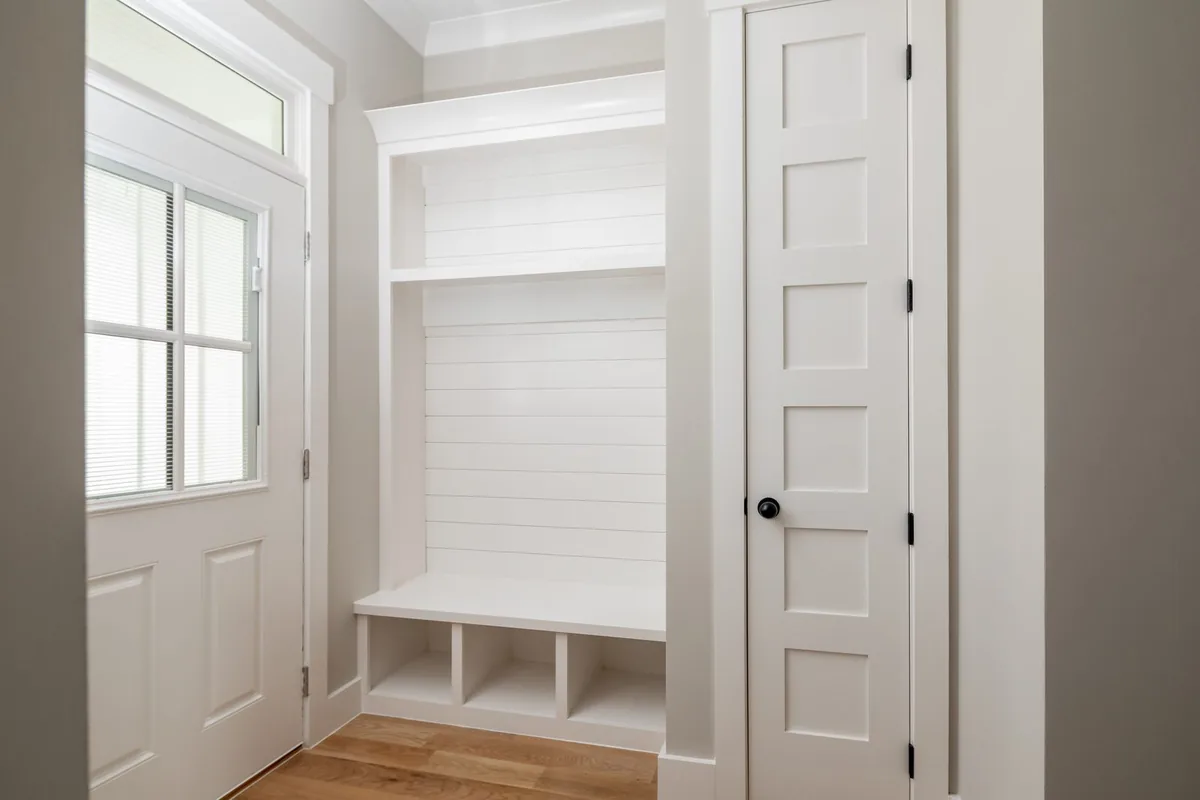
With a small builder, the relationship continues. The person who heard you explain why the mudroom matters is the person who builds the mudroom.
Questions to ask any builder before you sign
- Who will be my main contact during construction, and is that the person I am talking to now?
- Have you walked my lot, and what did you see that affects the plan or the build?
- Who can approve a change during construction, and how long does that usually take?
- How will you keep me updated, and how often?
- Who do I call if something goes wrong, and how quickly do they respond?
- Can I see a home you are building now and one you finished a few years ago?
- What is your Georgia contractor license number? (You can check it in five minutes on the Georgia Secretary of State website; see our license guide.)
- Will the name on my contract match the licensed company?
The Georgia Attorney General's Consumer Protection Division advises insisting on a contract with all guarantees, warranties and promises in writing. That applies whether your promises came from a builder or a sales rep.
The wrong way vs. the right way to compare builders
Whoever you talk to first, judge the company by how it works, not by the first conversation.
| The wrong way | The right way |
|---|---|
| Judging a builder by the model home or the showroom | Asking to see a home under construction and one finished a few years ago |
| Accepting "we can probably do that" about your lot | Getting a straight answer about your lot, including the harder or slower parts |
| Assuming the person you meet will run your job | Asking for the name of your day-to-day contact during construction |
| Trusting promises made in conversation | Making sure every promise ends up in the written contract |
| Taking the license number on faith | Checking it yourself on the state lookup |
Advantages of each approach
Advantages of talking to the builder
- Answers come from the person who will build the house, often in the same conversation.
- The builder knows your lot, or can walk it, and can tell you where the house sits best.
- Changes during construction get a yes, no or trade-off quickly, with fewer hand-offs.
- The person who heard what you wanted is the person who delivers it.
Advantages of working with a sales rep
- A well-run sales office makes buying in a planned community easy.
- Model homes and samples let you walk and touch the finishes before you commit.
- Reps keep regular hours and can explain a standard process clearly.
- For a set list of plans and options, the land questions are usually answered in advance.
If you are building custom, on your own land, or need a plan changed in ways that are not on an option sheet, you will usually be better served talking to the person who will build it.
When to do what
- Before the first meeting: look up the company's license number and check it on the state lookup.
- At the first meeting: ask who you are talking to and whether that person will run your job.
- Before you buy land or settle a plan: ask the builder to walk the lot with you.
- Before you sign: get your day-to-day contact, the change process and every promise in writing.
- Once construction starts: expect regular updates from the contact you were promised, and speak up early if that changes.
How it works at Ironwood
Ironwood Construction Group is a family-owned builder in Sugar Hill, founded in July 2008 by Clay Ortiz, who builds with his son Levi. There is no sales department. When you call about a custom home or remodel in Suwanee or anywhere in north Gwinnett and Hall County, you talk to the builder, and the builder is who you keep talking to through the build. We hold Georgia residential-light commercial license RLCO003511, active through June 30, 2028. If you would like a straight answer from the person who would build your home, talk to the builder.
Frequently asked questions about working directly with a builder
Is it better to work with the builder directly?
For a custom home, usually yes: the builder knows the site, can decide and stays with the job. For a standard plan in a planned community, a good sales team works well too.
Do small custom builders have sales reps?
Many do not. NAHB notes custom builders often build fewer than 10 homes a year, and at that size the owner usually handles first meetings, pricing and construction personally.
Who should be my main contact during construction?
Someone with authority to make decisions and who is regularly on your site. Ask for that person's name before you sign, and ask how and how often they will update you.
What should I ask a builder at the first meeting?
Ask who your contact will be during construction, whether they have seen your lot, who approves changes, how they communicate and their Georgia license number, then check it yourself.
Does talking to the builder make a custom home cost more?
Not by itself. What you pay depends on the plan, the lot, your selections and the contract. Talking to the builder mainly changes how quickly and clearly you get answers.
Sources
- National Association of Home Builders, "Custom Homes" consumer resource, nahb.org
- Georgia Secretary of State, Residential and Commercial General Contractors FAQ, sos.ga.gov
- Georgia Attorney General Consumer Protection Division, Home Building and Home Repairs/Improvements, consumer.georgia.gov