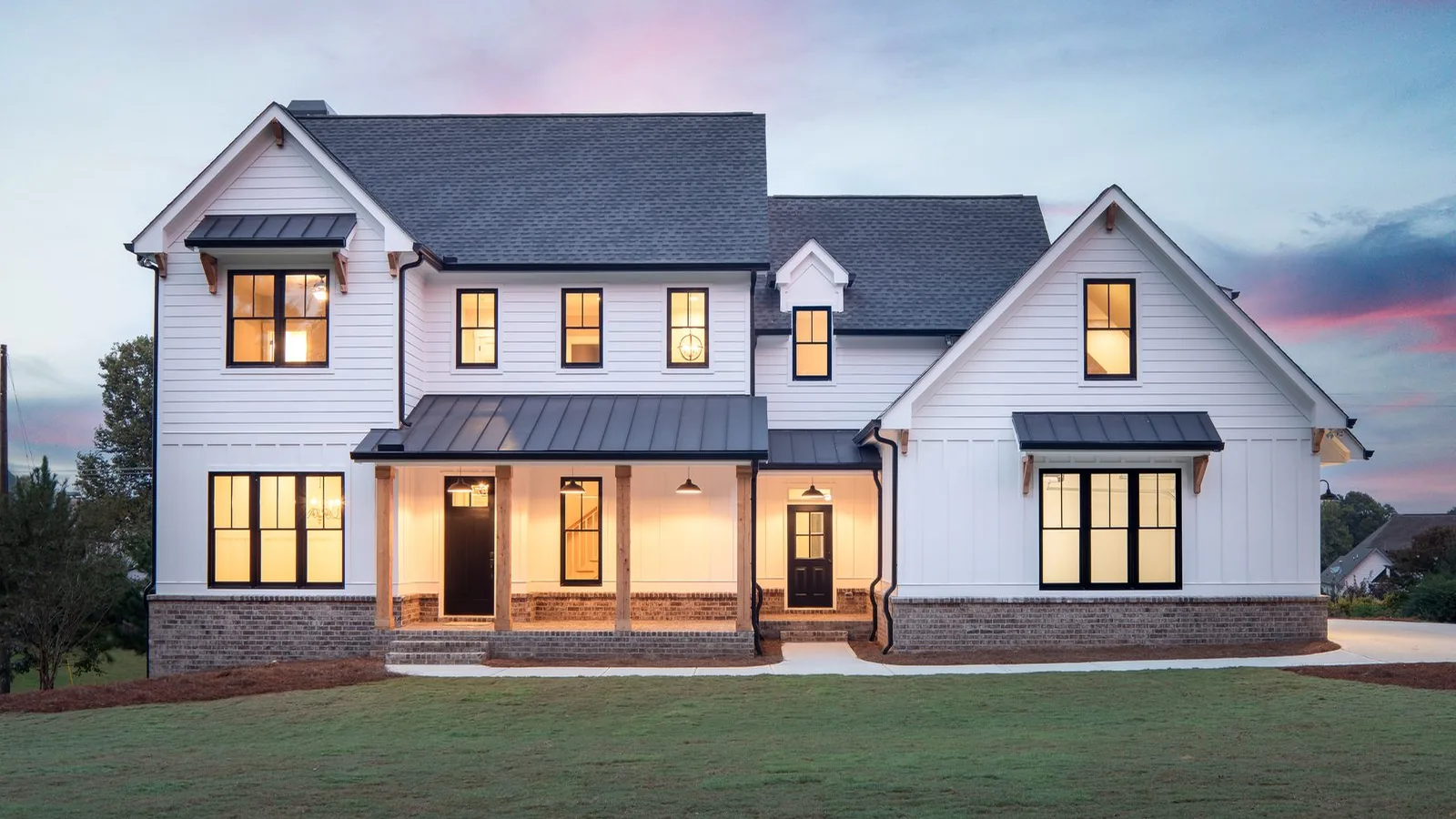
Spec Home vs. Custom Build in Buford: What You Give Up and What You Gain
Quick answer: A spec home is built before a buyer exists, so it is faster to move into and its price is set up front, but the builder chooses the lot, plan and finishes. A custom home is designed for you, often on land you choose, so it takes longer and needs more decisions, but it fits the way you actually live. If your move date is fixed, a spec home usually wins. If the lot, layout or long-term fit matters most, build custom.
Buford buyers see both options everywhere: finished "quick move-in" homes in new communities, and custom homes going up on single lots closer to Lake Lanier. Neither is the right answer for everyone. This guide lays out what each path really gives you, and what it costs you in time and control, without the sales pitch.
What is a spec home?
A spec home, short for speculative home, is a house a builder starts without a specific buyer in mind. The builder picks the lot, the floor plan and the finishes, then sells the home during or after construction. As the National Association of Realtors explains in its consumer guide, how much you can change depends on how far along the house is when you buy. Early on, you may still choose flooring, lighting, tile, countertops and cabinets. Late in the build, you are buying it as it stands.
What is a custom home?
A custom home is designed and built for one specific household, usually on land the buyer owns or buys. The National Association of Home Builders notes that custom builders start fresh with each design and often build fewer than 10 homes a year. Custom building is a meaningful share of the market: NAHB counted about 54,000 custom home starts in the second quarter of 2025, roughly 19% of all single-family starts and the highest share since 2022 (NAHB, August 2025).
Spec home vs. custom home at a glance
| Factor | Spec home | Custom home |
|---|---|---|
| Who designs it | The builder, before you arrive | You and your builder, together |
| Move-in timing | Weeks to a few months if finished or nearly finished | NAHB data puts permit-to-completion at roughly 12 to 14 months |
| Lot | Chosen by the builder, often in a community | Your lot, or one you choose with your builder |
| Floor plan | Fixed, or a short list of options | Drawn or fitted to your lot and your family |
| Finishes | Chosen by the builder; some choice if bought early | Your selections throughout |
| Price certainty | Price is set when you sign | Depends on the contract type and your change orders |
| Decisions you make | Few | Many, spread over several months |
| Best for | A firm move date and a ready-made fit | A specific lot, school zone or long-term layout |
The wrong way vs. the right way to choose
Most regrets on either path come from deciding on the wrong question.
| The wrong way | The right way |
|---|---|
| Treating a custom estimate as a final price | Asking which contract type you are signing and getting a written budget, since change orders and cost-plus contracts let the number move |
| Assuming you can change a spec home's finishes after you buy | Asking how far along the house is and which selections are still open, in writing |
| Choosing custom without a realistic move date | Planning on more than a year from first design meeting to move-in, and lining up housing for that time |
| Buying land first and finding a builder later | Having a builder walk the lot with you before you buy it |
| Picking a spec home for speed when your family needs a layout it can't offer | Deciding from how long you will stay and how you will actually live in the house |
| Signing without knowing who builds the house | Asking who your contact will be during construction and after closing |
Advantages of each path
Advantages of a spec home
- Speed. If the house is finished or close to it, you can move in on roughly the timeline of buying an existing home. For homes finished in 2025, NAHB found permit-to-completion took 7.4 months for homes built for sale, against 14.3 months for owner-built and about 11.7 months for contractor-built homes, both forms of custom building.
- A known price. You agree to a set price for a defined house, with little risk of mid-build changes.
- No double housing costs. You skip months of paying rent or a current mortgage alongside construction loan interest, land taxes and insurance.
- Fewer decisions. The builder has already chosen the plan, colors and fixtures. A custom build means hundreds of choices, from foundation type to cabinet pulls.
- What you see is what you get. You can walk the actual house before you commit.
Advantages of a custom build
- A home designed around you. Room sizes, layout, storage, an in-law suite, a workshop: the plan starts with your list, not a typical buyer's.
- Your choice of land. Build on family land, a lake-area lot or a specific street in the school zone you want. In Buford that can include the separate Buford City Schools district.
- Finishes chosen once. You make the selections before they are installed, instead of paying later to tear out new work.
- Control of quality. You choose materials and see the build at every stage.
- A direct relationship. With a small custom builder, you usually talk to the builder, not a sales office.
When to do what
- Before you start shopping: set your move date and how long you plan to stay. A move within six months usually points to a finished or nearly finished spec home; staying ten years or more spreads the extra months of a custom build over a long time in a house that fits.
- Before you tour homes or lots: list what your household needs. Multigenerational living, a main-floor suite or a large workshop point to custom; wanting the fewest decisions points to spec or a semi-custom plan.
- Before you make an offer on land: have a builder walk the lot with you so you know what it will take to build there.
- Before you sign for a spec home: find out which finishes are still open to change, and get it in writing.
- Before you sign a custom contract: settle the contract type, a written budget and where you will live during the build.
Why Ironwood does not build spec homes
Ironwood Construction Group is a father-and-son builder, Clay and Levi Ortiz, building in Buford, Sugar Hill and the rest of north Gwinnett and Hall County since 2008. We do not build spec homes. Every Ironwood home starts with a family and a lot, and you talk directly with the builder from the first lot visit to the keys. If you are weighing a spec home against a custom build in Buford, talk to the builder before you decide; we will tell you honestly when a spec home is the better fit.
Frequently asked questions about spec and custom homes
Is a spec home cheaper than a custom home?
Usually, yes, when you compare similar homes. Spec builders buy materials in bulk and reuse proven plans, which lowers their cost. A custom home costs more to design and build, but you are paying for a home and a lot chosen around your needs.
Can I make changes to a spec home?
Sometimes. If you buy early in construction, the builder may let you choose some finishes such as flooring, tile, lighting and countertops. Once those are installed, changes mean extra cost and delay.
How long does it take to build a custom home?
Plan on more than a year from first design meeting to move-in. NAR's guide puts design at three to six months and construction at 12 to 16 months or more, and NAHB data for 2025 puts custom permit-to-completion at roughly 12 to 14 months.
Is semi-custom a middle option?
Yes. With semi-custom, you start from an existing floor plan and change parts of it, such as enlarging a room or reworking the kitchen. It is faster than fully custom and more flexible than spec.
Do I need to own land before building a custom home?
No. Many buyers find land with their builder's help. It is wise to have a builder walk a lot with you before you buy it, so you know what it will take to build there.
Sources
- National Association of Home Builders, "Custom Home Building Grows as Broader Housing Market Struggles," August 20, 2025
- National Association of Home Builders, "Custom Homes" consumer resource
- National Association of Realtors, "Consumer Guide: Buying Land and Building a New Home," April 2025
- National Association of Home Builders, Eye on Housing, "Single-Family Home Construction Time Declines in 2025," September 8, 2026
- Realtor.com, "Spec Home vs. Fully Custom: Which One Makes More Financial Sense?", December 30, 2025