Selections Without a Showroom: How Finish Choices Work With a Small Builder
Quick answer: A small builder may not have its own design studio, but the selections process works the same way. You choose finishes in stages at the suppliers and showrooms the builder already works with, guided by a written schedule and allowances in your contract. The key is knowing what to choose and when, so the build never waits on a decision.
Some builders around Braselton advertise a design studio where you pick everything in one room. That can be convenient, but it is not the only way to a well-chosen home. With a small custom builder, you usually shop where the trades buy, with the builder alongside you.
How do selections work without a design studio?
You visit specialist suppliers instead of one building. Cabinet shops, stone yards, tile and flooring stores, plumbing and lighting showrooms each carry far more choice than any single studio can display. The builder's job is to send you to the right places, in the right order, with a budget and deadline for each.
What do you choose, and when?
You choose in roughly the order the house is built.
| Selection | What you choose | Roughly when in the build |
|---|---|---|
| Structural and plan choices | Layout changes, ceiling heights, window sizes, fireplace, built-ins | Before permits and pricing are final |
| Exterior | Siding, brick or stone, roofing, windows, exterior doors, colors | Before or during foundation work |
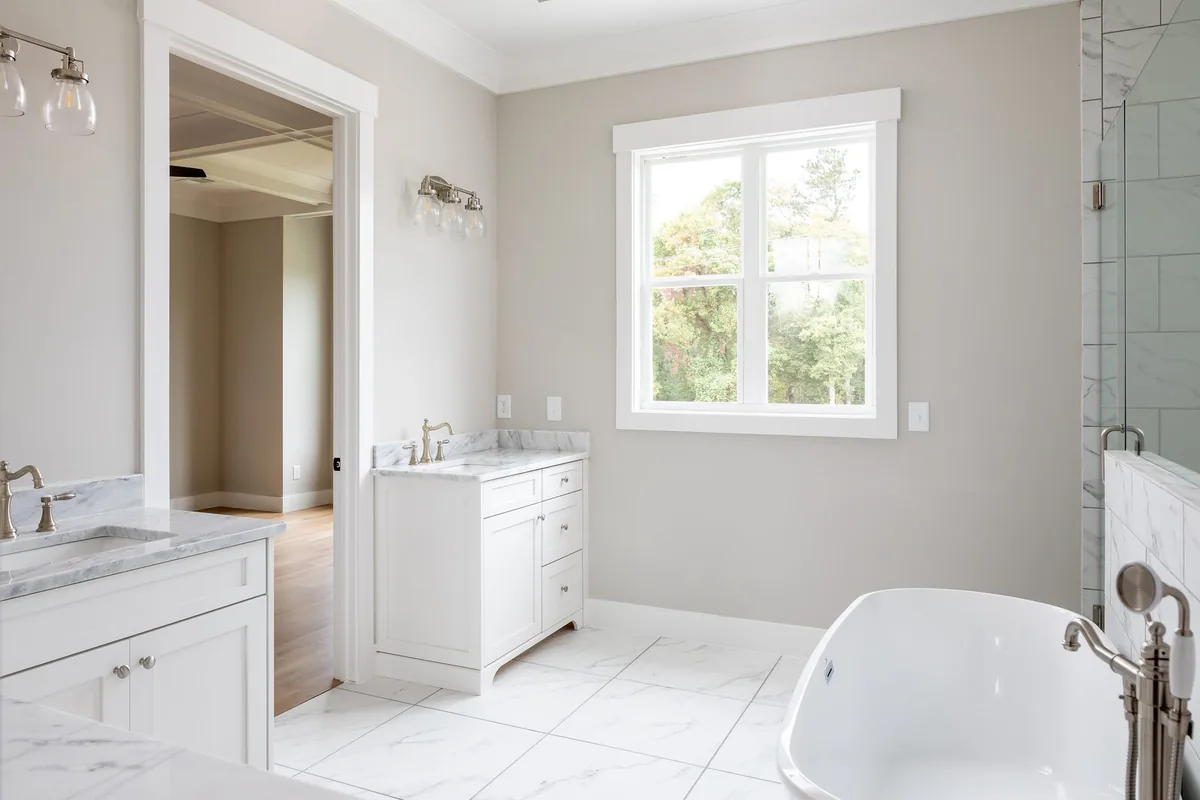
| Plumbing fixtures | Tubs, shower valves, sinks, faucets, toilets | Before plumbing rough-in |
| Electrical | Fixture locations, lighting plan, outlets, low-voltage wiring | Before electrical rough-in and the walk-through |
| Cabinets | Layout, door style, finish, interior storage | Around framing, given long lead times |
| Countertops | Material, color, edge profile | After cabinet design is set; measured once cabinets are in |
| Flooring | Wood, tile, carpet, transitions | Before drywall is finished |
| Paint | Interior and trim colors, sheen | Before interior paint begins |
| Hardware | Door hardware, cabinet pulls, bath accessories | Before trim and final finish |
What are allowances, and how do they work?
An allowance is a budget written into your contract for an item you have not chosen yet, such as light fixtures or countertops. If your choice costs more than the allowance, you pay the difference; if it costs less, you may get a credit, depending on the contract. NewHomeSource notes that builders handle credits differently, so read how yours works. A few points to check:
- Is each allowance realistic for the quality of home you are building? An allowance set too low makes a price look better than it is. The Ascent advises shopping around early to test whether allowances are reasonable.
- Does it include installation, or only the material?
- How are overages and credits handled, and when are they billed?
- Can you finalize selections early to replace allowances with real prices? The more you choose before construction starts, the more certain your price.
How do you make selections with a small builder?
- Gather ideas. Photos, saved boards and homes you have toured all help. Mark what you love and what you never want.
- Get your selections schedule and allowances in writing. Each category should have a budget and a due date tied to the build.
- Visit suppliers in build order. Take the plan with you so suppliers can quote accurately.
- Confirm each choice in writing. Model numbers, colors and quantities go on a signed selection sheet or change order, so nothing is ordered from memory.
- Walk the house at key stages. Seeing rooms framed often changes a lighting or tile choice, and changing before installation is far cheaper.
Do selections have to meet any Georgia rules?
Some do. Georgia's Water Stewardship Act amended the state plumbing code for new construction, so toilets, showerheads and faucets must meet flow limits, such as toilets averaging 1.28 gallons per flush or less, according to University of Georgia Extension. Showroom staff and your plumber will steer you to compliant fixtures.
The wrong way vs. the right way to make selections
Most selection headaches come from choosing too late or without a written record.
| The wrong way | The right way |
|---|---|
| Leaving every finish until the house is framed | Choosing in stages, each item before the trade that installs it |
| Assuming each allowance fits the home you want | Pricing a few real choices early to test each allowance |
| Choosing tile or counters from a photo on your phone | Seeing samples in person, side by side, before you commit |
| Agreeing to a choice out loud at the showroom | Writing model numbers, colors and quantities on a signed selection sheet |
| Picking countertops before the cabinet design is set | Settling cabinets first, then countertops, as the build order requires |
Advantages of each approach
Advantages of a builder's design studio
- Many choices are in one place, so you can compare options in a few visits.
- The studio's range is already matched to the builder's pricing and allowances.
- Studio staff walk you through each category in order.
- It suits families with little time to drive between suppliers.
Advantages of shopping suppliers with your builder
- You can see full stone slabs, whole tile lines and working fixtures, not just small samples.
- The builder who will install the item helps you judge what works with the plan.
- You are not limited to a preset menu, so unusual finishes are easier to include.
When to do what
- While the plan is being drawn: start gathering ideas, so structural choices such as ceiling heights and built-ins make it into the plan.
- Before you sign the contract: get the selections schedule and allowances in writing, and finalize as many choices as you can.
- Before construction starts: settle exterior choices, with plumbing fixtures soon after.
- Around framing: design the cabinets, given their long lead times, and walk the rooms before electrical rough-in.
- Before drywall is finished: choose flooring, then lock in paint and hardware before the finish trades arrive.
How Ironwood handles selections
Ironwood Construction Group is a family-owned builder, Clay Ortiz and his son Levi, building custom homes in Braselton, Hoschton and across north Gwinnett and Hall County since July 2008. We do not run a design studio. Instead, you work directly with the builder and visit the suppliers and showrooms we use, with a clear idea of what is due and when. To see finished selections in real homes, browse our custom builds, then talk to the builder.
Frequently asked questions about custom home selections
When should I start making selections?
While the plan is being drawn. Structural and exterior choices come before construction starts; interior finishes follow the build.
What happens if I go over an allowance?
You usually pay the difference, often through a change order. Ask how overages are billed and whether installation costs change too.
Can I change a selection after it is ordered?
Sometimes, but it may bring restocking fees and delays. Changes are easiest before an item is ordered and much harder once it is installed.
Do I need an interior designer?
No, though some families like one. Suppliers' showroom staff help with choices, and your builder can tell you what works with the plan and the budget.
How many decisions will I make?
Many, spread across several months. A written selections schedule breaks them into small groups, so you are never deciding everything at once.
Sources
- NewHomeSource, "What to Know About Builder Allowances," March 14, 2025
- The Ascent (Motley Fool) via Nasdaq, "3 Things to Know About Allowances in a New Build," July 29, 2021
- University of Georgia Cooperative Extension, Circular 995, "The Georgia Water Stewardship Act," revised May 15, 2023